
Home Gardening for Health & Self-Reliance
Grow fresh vegetables, fruits, and culinary herbs at home — even with a windowsill, balcony, or small backyard. Simple, beginner-friendly methods that actually work.
Why People Are Growing Food at Home
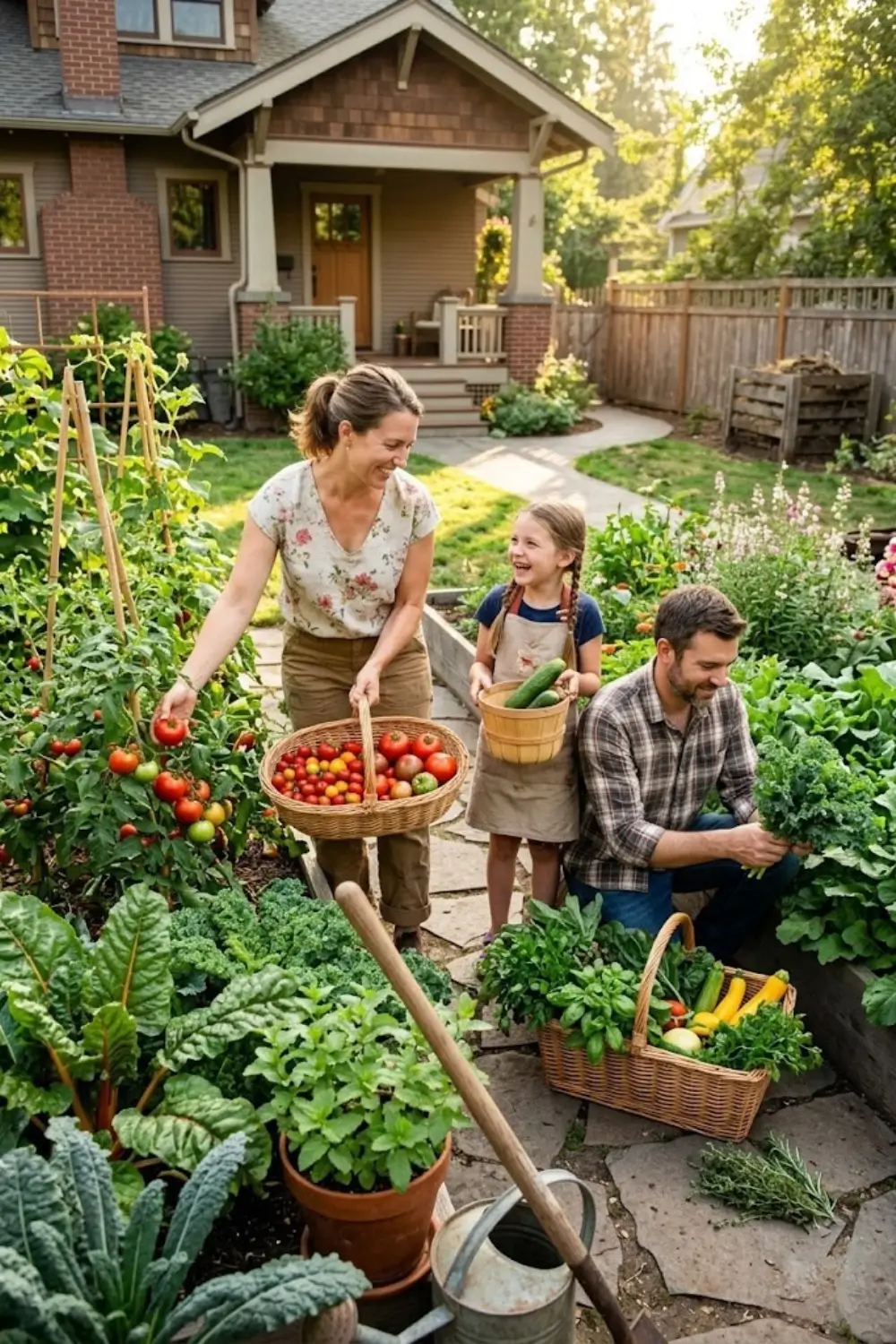
A Return to Growing Your Own
Home gardening has seen a quiet but sustained resurgence across the globe. In the US, surveys suggest over half of households now grow some food at home — the highest rate in decades. In India, apartment balcony gardens and rooftop kitchen gardens have become mainstream across urban centres. Australians and Canadians show similar trends.
This isn't nostalgia. It's a practical response to rising grocery costs, a desire for fresher food, and a growing interest in understanding where things come from. Home gardening — even at a small scale — builds real skills and delivers tangible benefits from the first harvest.
How Gardening Supports Daily Wellbeing
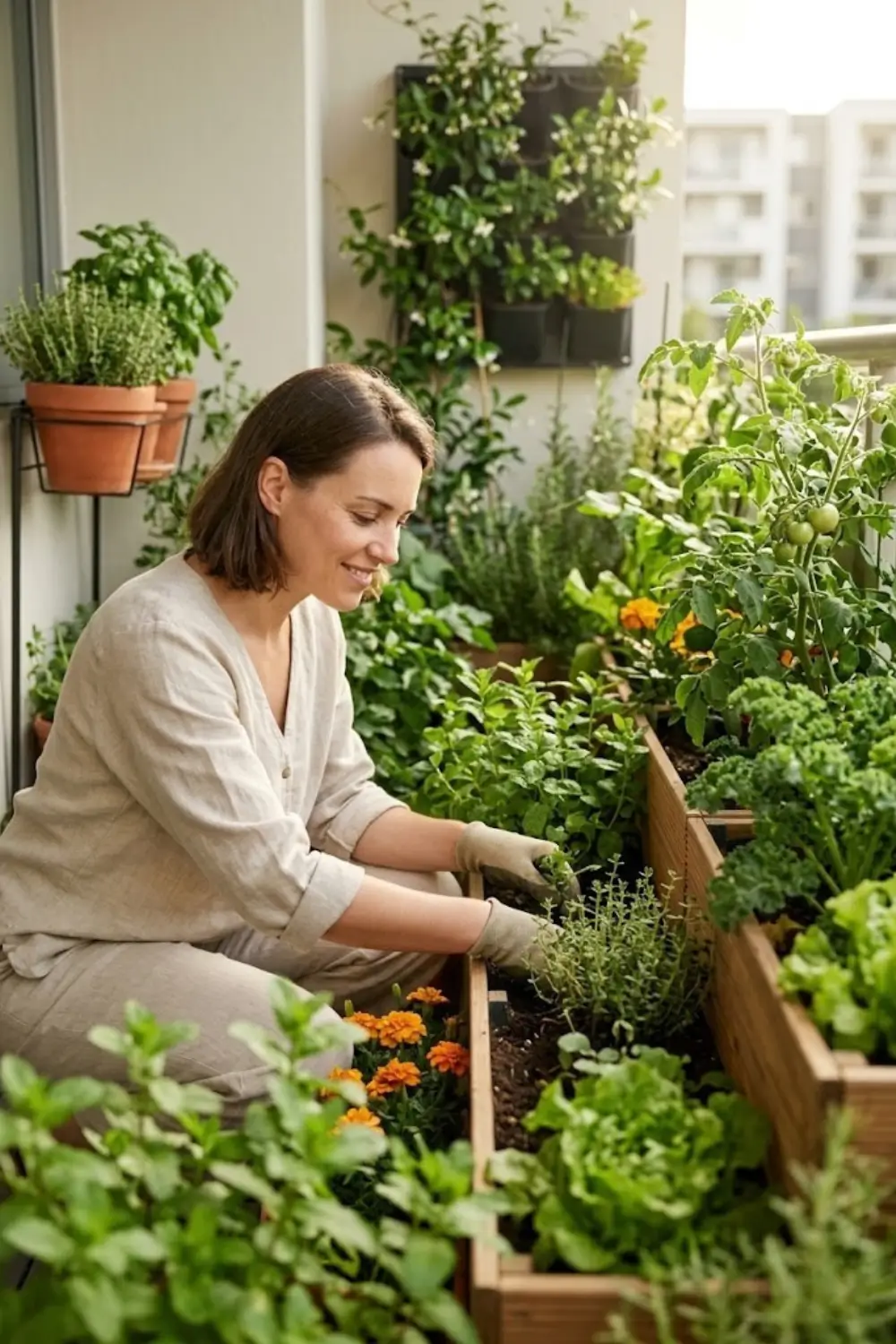
More Than Just Food
The benefits of home gardening extend well beyond the produce it generates. Research consistently links regular gardening with measurable improvements in both physical and mental health — across age groups and cultures.
Spending time outdoors while gardening can contribute to natural sunlight exposure, which plays a role in overall well-being. Sunlight is one of the natural sources that helps the body maintain healthy vitamin D levels, which are associated with functions such as bone health and general wellness.
Regular gardeners report better mood, reduced anxiety and depression symptoms, improved sleep quality, and a stronger sense of purpose and accomplishment. The meditative quality of repetitive, hands-on tasks — weeding, watering, pruning — quiets a busy mind in ways that are difficult to replicate indoors.
Concrete Benefits of Home Gardening
Stress Reduction
Physical contact with soil exposes us to Mycobacterium vaccae, a beneficial bacterium associated with improved mood and reduced anxiety. Thirty minutes of gardening measurably reduces cortisol in clinical studies.
Physical Activity
Digging, planting, watering, and harvesting provide moderate cardiovascular activity and strength work — 200–400 calories per hour depending on intensity. The difference: it doesn't feel like exercise.
Fresher Nutrition
Home-grown produce is harvested at peak ripeness and eaten within hours. Nutrients and flavour that degrade during transport and storage arrive on your table intact. The taste difference from supermarket produce is often remarkable.
Mindfulness
Gardening requires presence — noticing plant changes, responding to conditions, making decisions based on what is actually in front of you. Many gardeners describe it as their most reliable way to quiet a busy mind.
Family & Community
Gardening is one of the most naturally shared activities across generations. Children who grow food develop a lifelong relationship with food, nature, and patient effort that classroom learning rarely provides.
Self-Reliance
Growing your own food builds practical skills and real independence. Even a small garden covering 10–15% of household vegetable consumption represents meaningful self-reliance — and that percentage grows with every season of experience.
📌 What This Page Covers
This guide covers all aspects of home food gardening — vegetables, fruits, culinary herbs, containers, raised beds, balconies, indoor growing, soil basics, watering, tools, seasonal care, and common mistakes. Designed for beginners of all experience levels, across all climates.
For growing medicinal herbs — Chamomile, Echinacea, Lavender, Calendula and
others — see our companion guide:
Medicinal Plants & Everyday Wellness →
For fertiliser safety, pest control, and soil inputs in depth, see:
Safe Inputs & Natural Practices →
Start Here: Know Your Garden Type
The right starting approach depends on the space you actually have — not the ideal setup you imagine. Match your situation to one of these, and everything else follows.
Windowsill & Indoor
A south or east-facing window with 3–6 hours of light is enough for leafy greens, culinary herbs, radishes, and microgreens. Perfect for apartments with no outdoor access.
Indoor Growing Setups →Balcony & Terrace
Containers and grow bags on a sunny balcony can produce tomatoes, chillies, spinach, beans, and a full culinary herb garden. Wind and weight are the key variables to manage.
Balcony Garden Setups →Small Backyard & Patio
Even a single 4×8 ft raised bed produces more vegetables than most families expect in a season. Containers and in-ground planting can be combined to maximise yield.
Raised Bed Options →Larger Yard or Plot
Rotating beds, fruit trees, perennial herbs, composting systems. More space means more options — and more to learn each season. A great position to be in, one bed at a time.
Explore Options →6 Steps to Getting Started
| Step | Action | Why It Matters |
|---|---|---|
| 1 | Observe your light | Count hours of direct sunlight per area. Most vegetables need 6+ hrs. Leafy greens and herbs tolerate 3–4 hrs. This single observation guides every plant choice. |
| 2 | Start with 2–3 plants | Two pots of tomatoes and one of basil teach you more in a season than twenty different plants struggling for your attention. |
| 3 | Choose the right containers | Under-potting restricts roots and reduces yields dramatically. Match pot size to the plant's root depth — see the container guide below. |
| 4 | Learn your water | Check soil moisture with a finger 2 inches deep — not a calendar. Overwatering kills more plants than drought. |
| 5 | Feed the soil first | A handful of compost mixed in at planting gives roots a healthy start. Healthy soil biology supports plants naturally. See Safe Inputs → |
| 6 | Keep a simple journal | Two or three sentences per week — what you planted, what happened — builds a reference you'll use every season. Patterns emerge quickly. |
Indoor Gardening: Growing Year-Round
No outdoor space? No problem. Indoor gardening works in apartments, condos, and any home with a window — or space for a grow light.
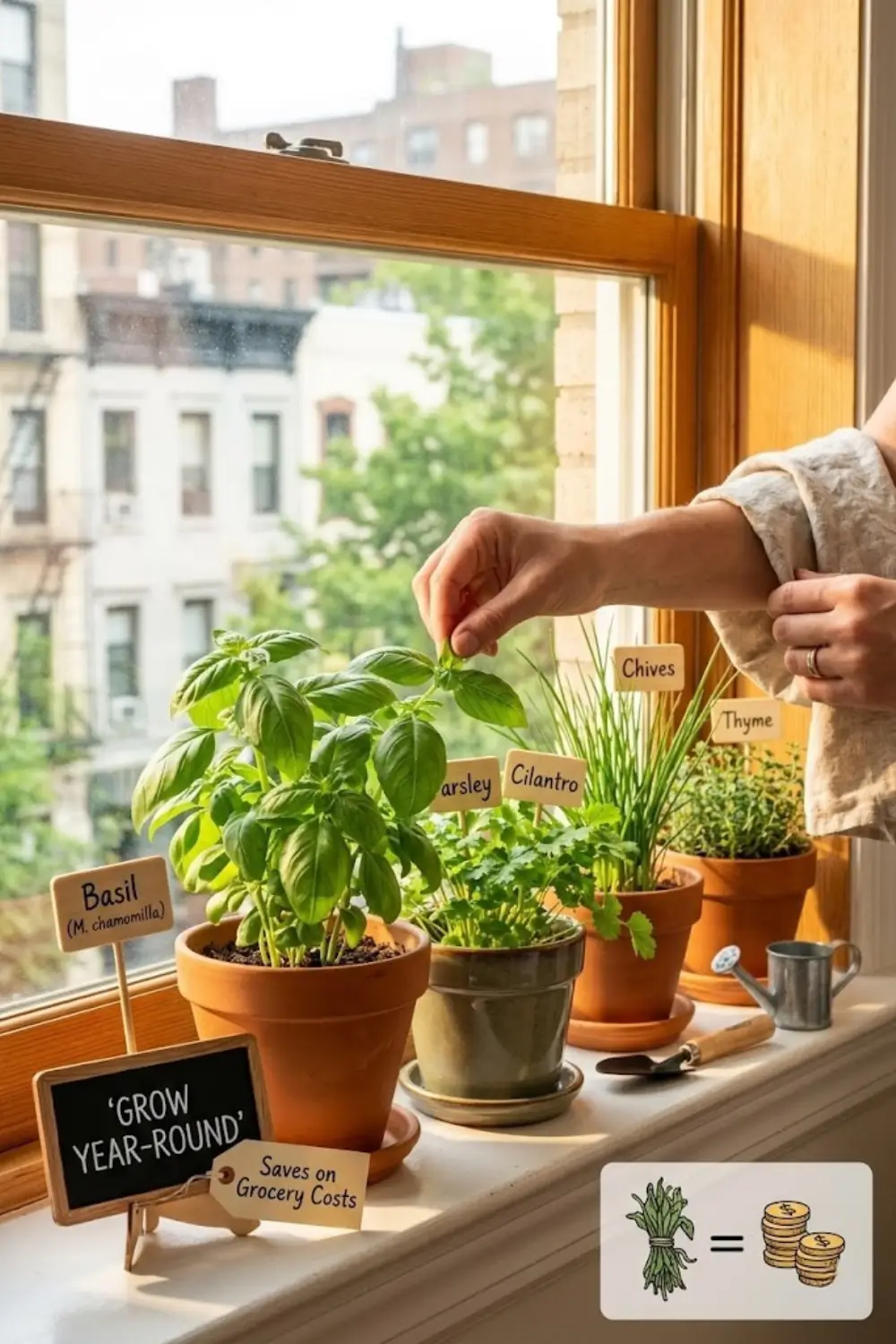
Windowsill Herb Gardens
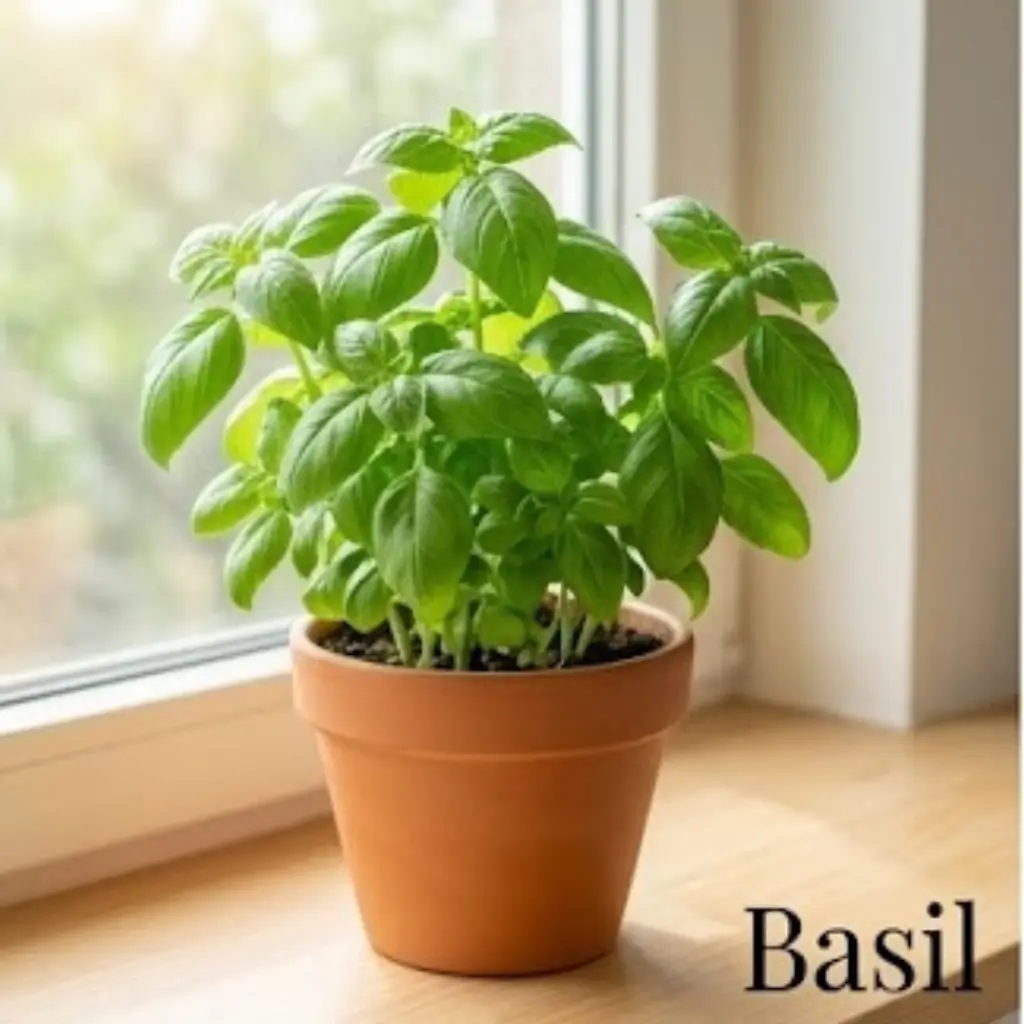
The simplest indoor garden is a sunny south-facing window (north-facing in the southern hemisphere) with 4–6 hours of direct light. Basil, parsley, coriander, chives, and thyme thrive on windowsills in 15–20 cm pots with proper drainage.
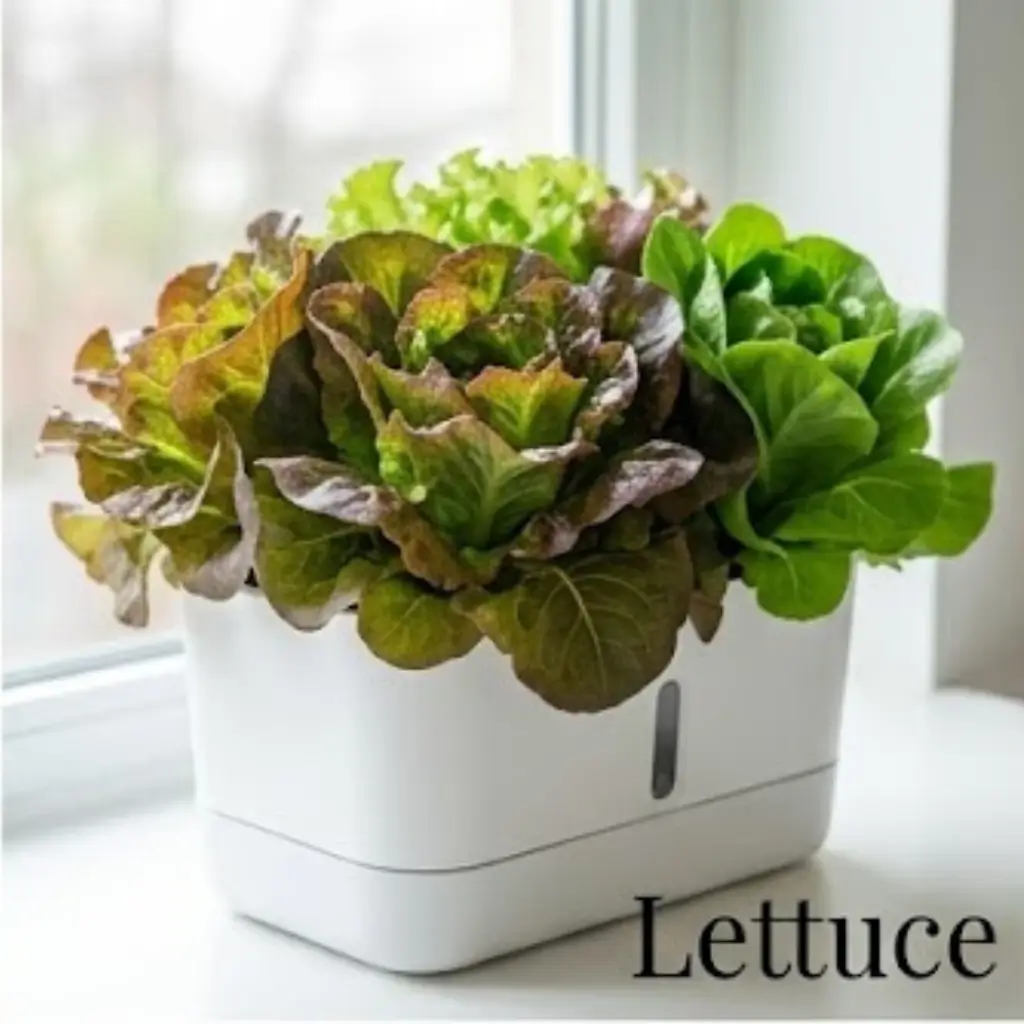
Cut-and-come-again crops like lettuce, spinach, and mint grow continuously when you harvest outer leaves rather than pulling the whole plant. A single pot maintained this way can provide fresh greens for months.
Water quality tip: Fill your watering can and leave it overnight before using. Chlorine dissipates naturally, making tap water gentler on herbs like basil and coriander. Where possible, collect rainwater — it's slightly acidic, which most edible plants prefer.
Countertop Hydroponic Systems
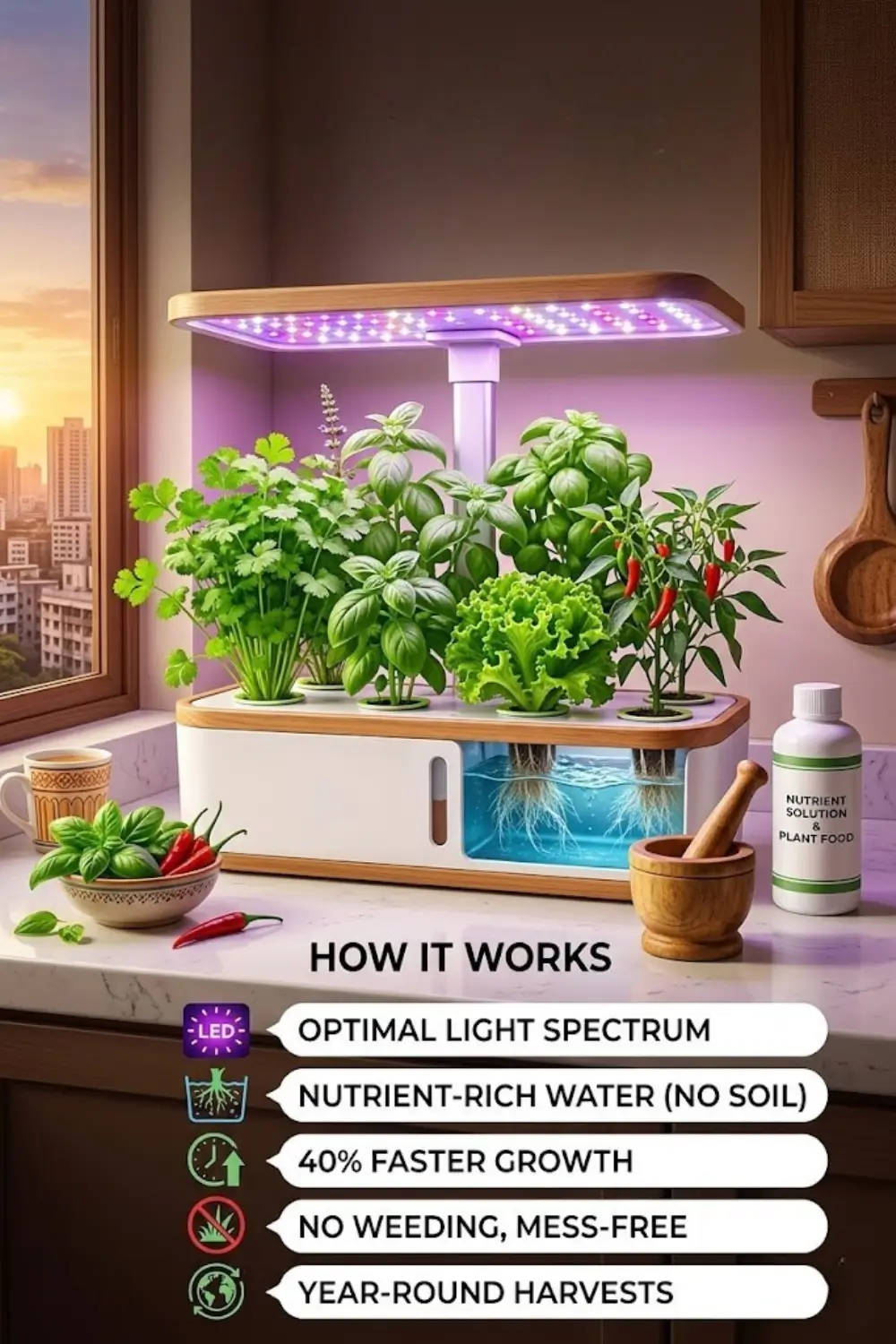
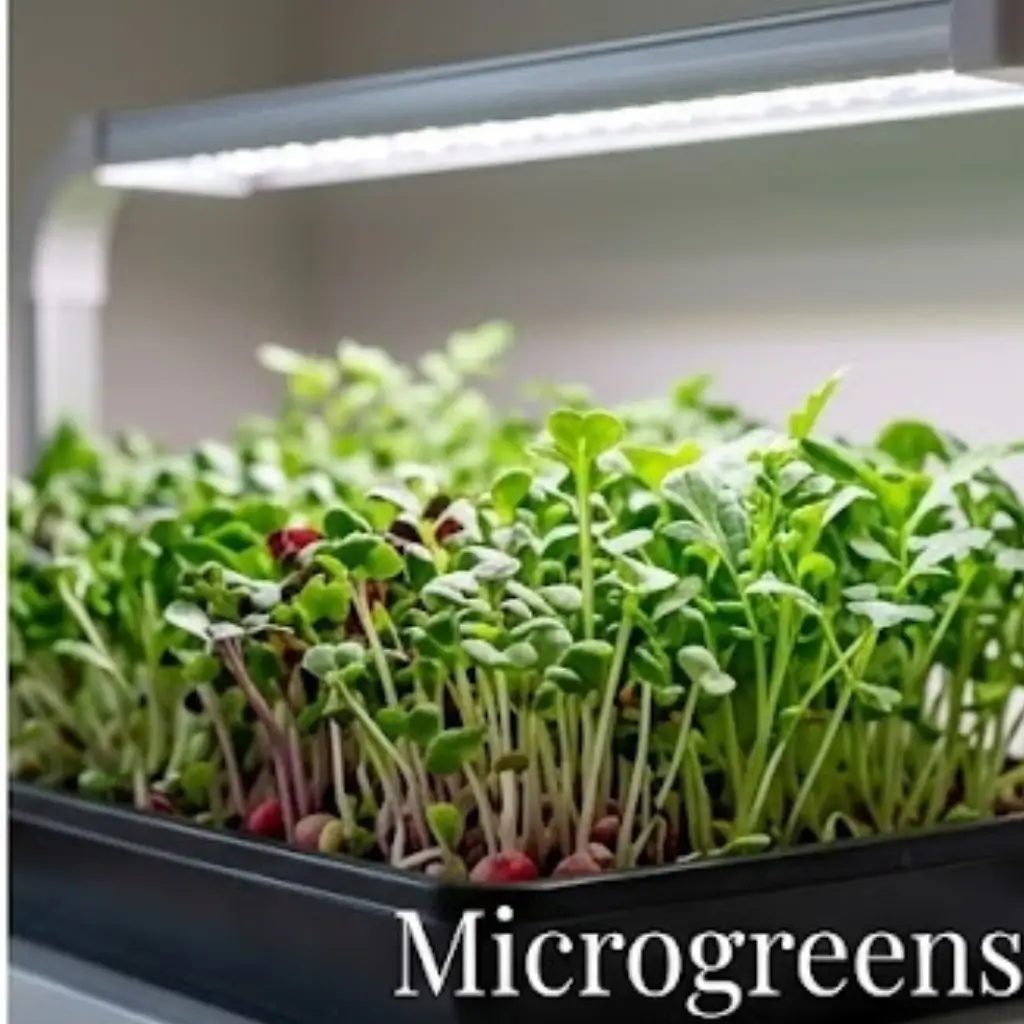
Hydroponics — growing plants in water with nutrients rather than soil — has become genuinely practical for home use. Countertop systems grow herbs, lettuce, and microgreens significantly faster than soil, with no mess, no weeding, and far less water (it recirculates within the system).
Simple plug-and-play systems require only water, nutrient solution, and seed pods. Lettuce and herbs can be ready to harvest within a few weeks of planting. For beginners who want predictable results indoors, these systems remove most of the guesswork around soil and moisture.
For those who prefer soil, a simple Kratky method setup — a sealed jar with nutrient solution and no pump — grows lettuce, herbs, and greens with almost no maintenance and no electricity required.
LED Grow Lights for Indoor Plants
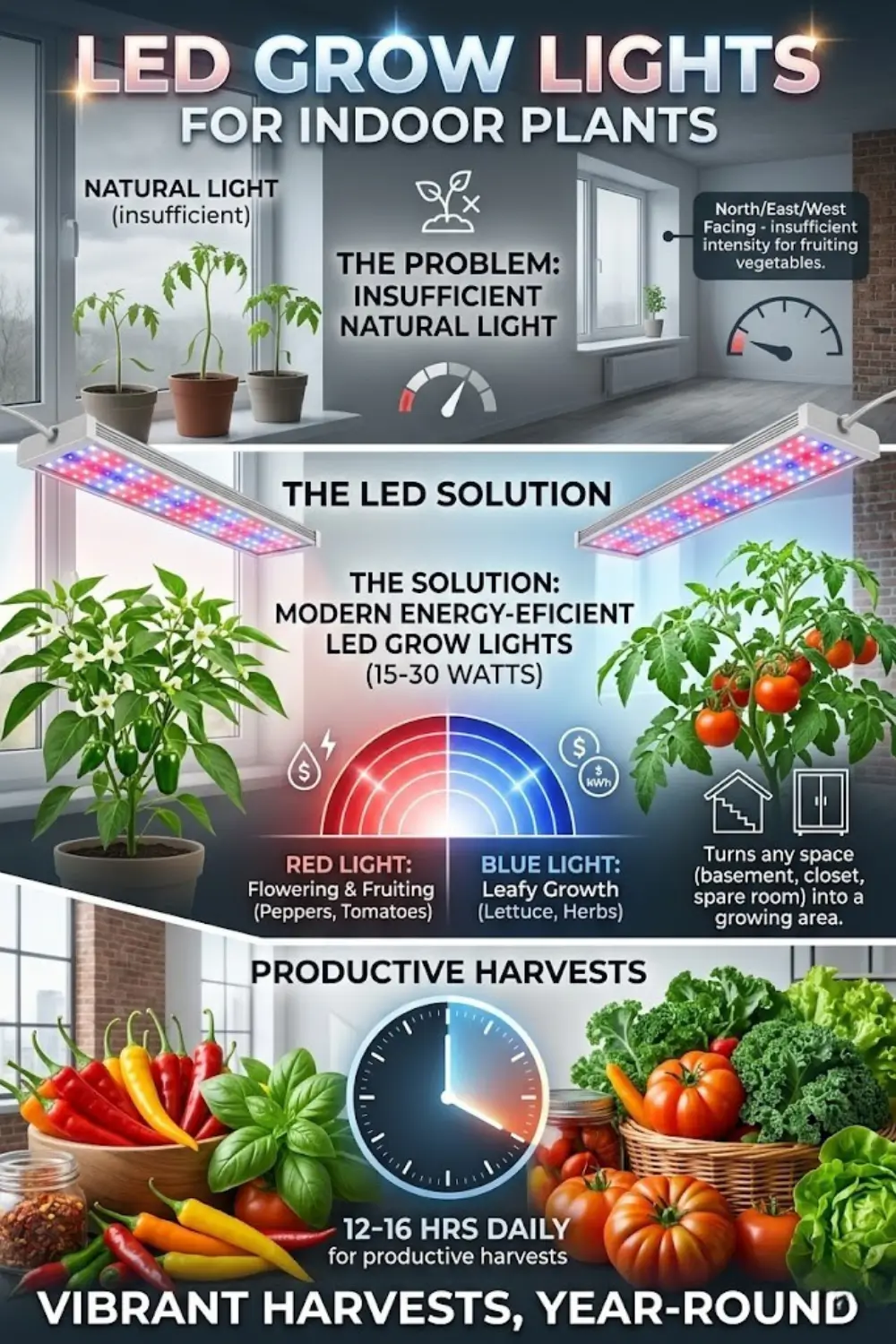
Most homes do not receive enough natural light for productive indoor food growing. Windows that get the strongest, longest daily sunlight usually perform best. Windows with limited direct sun often provide insufficient light for fruiting vegetables, and during shorter winter days, even bright windows may not be enough. .
LED grow lights solve this. Full-spectrum LED grow lights are energy-efficient, cool-running, and designed to provide the light plants need for photosynthesis, healthy growth, flowering, and fruiting. They can turn small spaces—such as a kitchen counter, shelf unit, or spare room—into productive indoor growing areas. These lights mimic natural sunlight, with blue light supporting leafy growth and red light encouraging flowering and fruit production.
Setup basics: Keep LEDs 10–15 cm above seedlings and 20–30 cm above mature plants. Run 14–16 hours on, 8–10 hours off. A simple timer removes the need to remember to switch them.
Best Plants for Indoor Growing
Basil
Lettuce
Microgreens
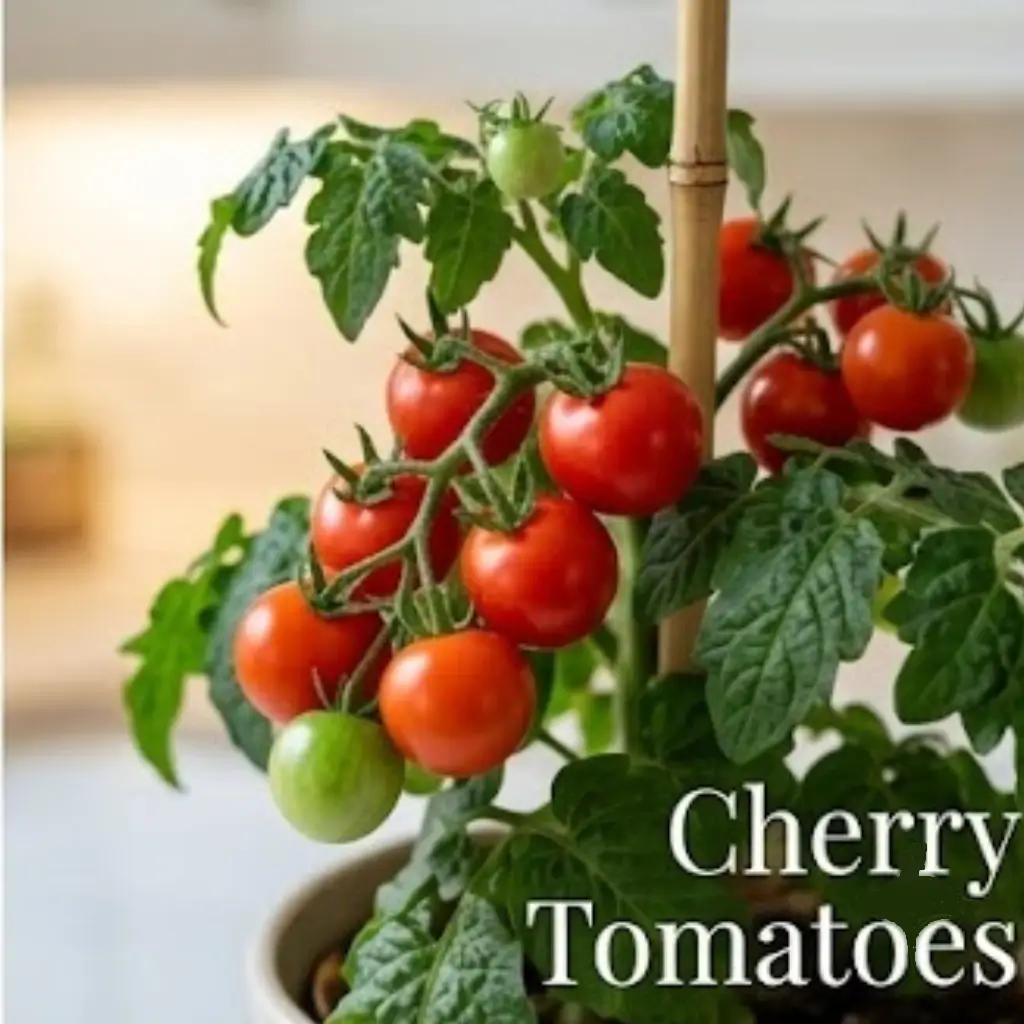
Cherry Tomatoes
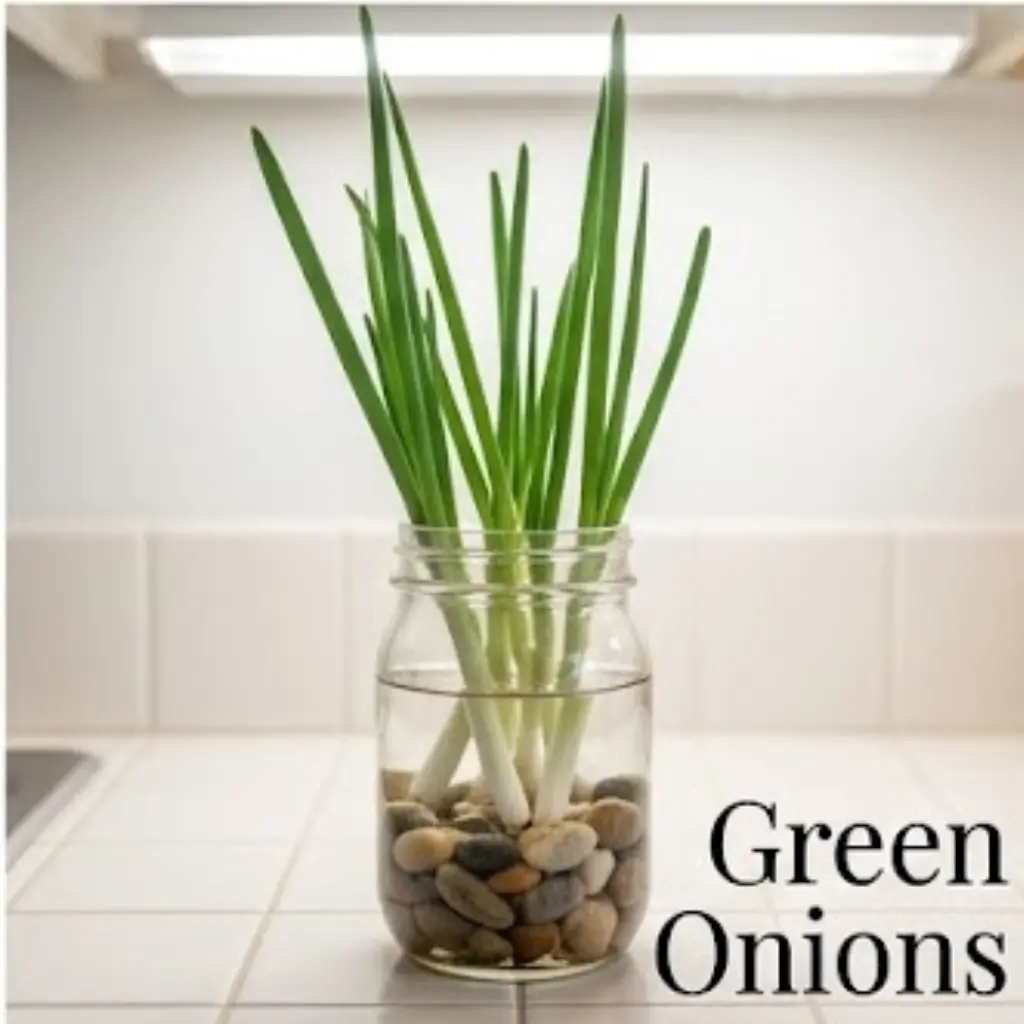
Spring Onions
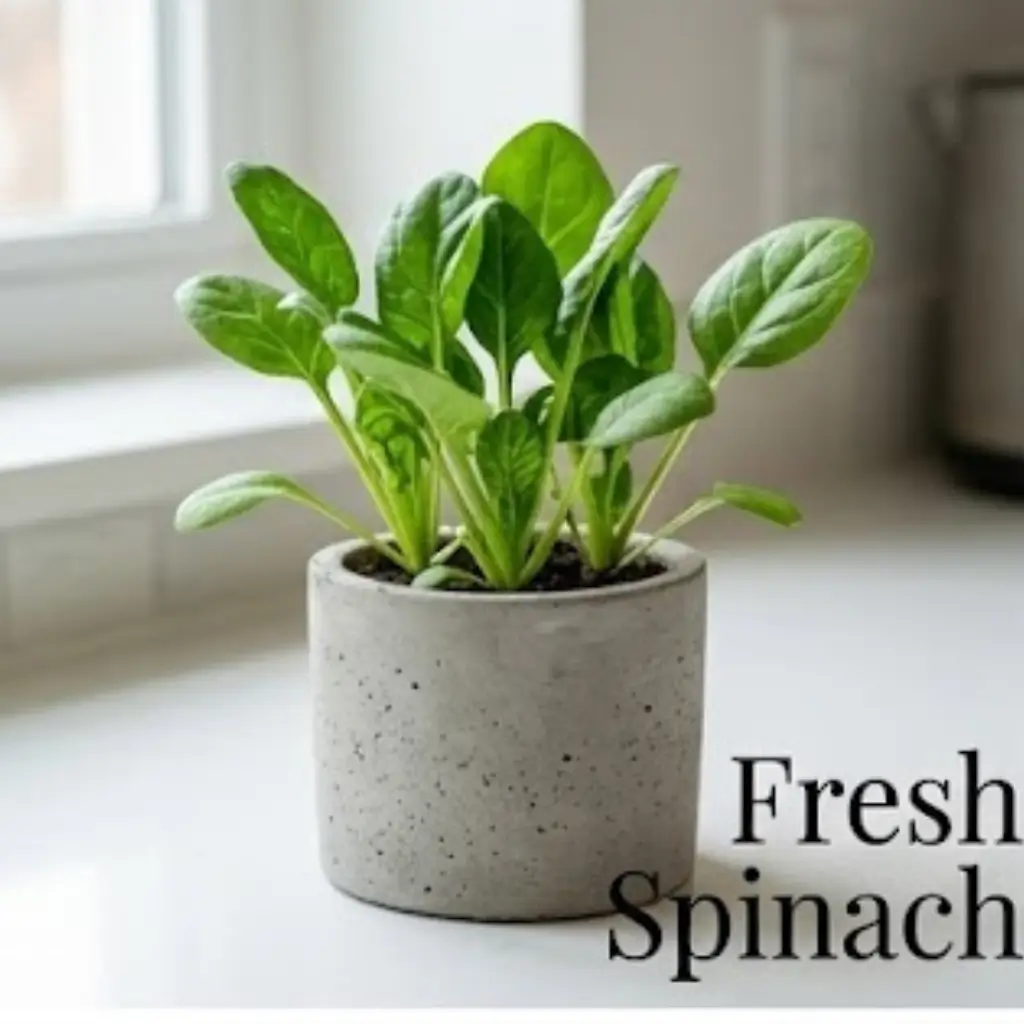
Spinach
💡 Indoor Growing Tip
Start with herbs and leafy greens — they are the most forgiving indoors. Cherry tomatoes and chillies are achievable with a proper LED grow light. Avoid large fruiting plants like full-size tomatoes or climbing cucumbers indoors unless you have a dedicated grow space with strong supplemental lighting.
Outdoor Gardening: Balconies, Patios & Yards
No indoor space? No problem. Outdoor gardening thrives on balconies, patios, rooftops, and yards—turning any sunny area into a productive space for growing fresh vegetables, herbs, and flowers.
Container Gardening for Small Spaces
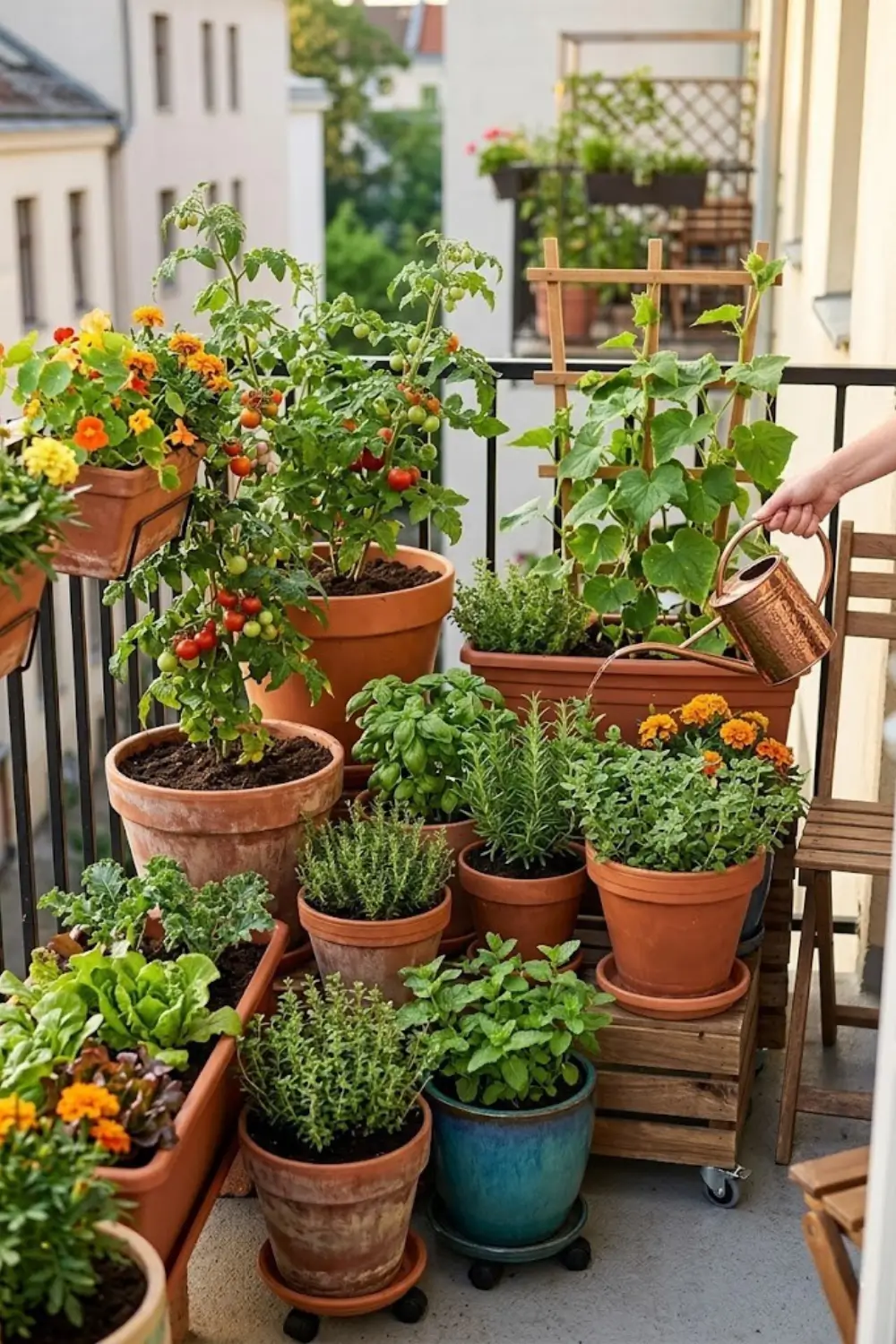
Container gardening is the most flexible option for balconies, patios, and small yards. Almost any vegetable, herb, or fruit grows successfully in pots — provided the container is the right size, has proper drainage, and uses a quality potting mix (not garden soil).
Container advantages: Mobility — move pots to follow the sun or shelter from heavy rain. Complete soil quality control. Easier pest management. No ground-digging required. Scales from one pot to a hundred.
Container sizing matters: Under-potting is the most common beginner mistake. Roots need room — always choose one size larger than you think you need. See the sizing table below.
Container Sizing Guide
| Plant | Minimum Size | Ideal Size | Notes |
|---|---|---|---|
| Small herbs (mint, basil, chives) | 15 cm / 6 in | 20–25 cm / 8–10 in | Can share a larger pot |
| Coriander, parsley, dill | 20 cm / 8 in | 25–30 cm / 10–12 in | Deep pot for tap root |
| Lettuce, spinach, greens | 20 cm / 8 in deep | 30 cm / 12 in wide | Wide and shallow works well |
| Cherry tomatoes | 30 cm / 12 in | 40–50 cm / 16–20 in | Stake or cage required |
| Standard tomatoes | 40 cm / 16 in | 50+ cm / 20+ in | Self-watering pots ideal |
| Chillies & peppers | 25 cm / 10 in | 35–40 cm / 14–16 in | Perennial in warm climates |
| Aubergine / Eggplant / Brinjal | 35 cm / 14 in | 45–50 cm / 18–20 in | Loves heat and full sun |
| Root vegetables (carrot, radish) | 30 cm / 12 in deep | 35+ cm / 14+ in deep | Depth is critical |
Critical success factors: Use containers with proper drainage holes to help prevent excess water buildup, choose an appropriate pot size based on the plant (larger plants like tomatoes generally need bigger containers, while herbs can grow in smaller pots), use a quality potting mix rather than heavy garden soil, and maintain consistent watering since containers tend to dry out more quickly than in-ground beds.
Raised Bed Gardening
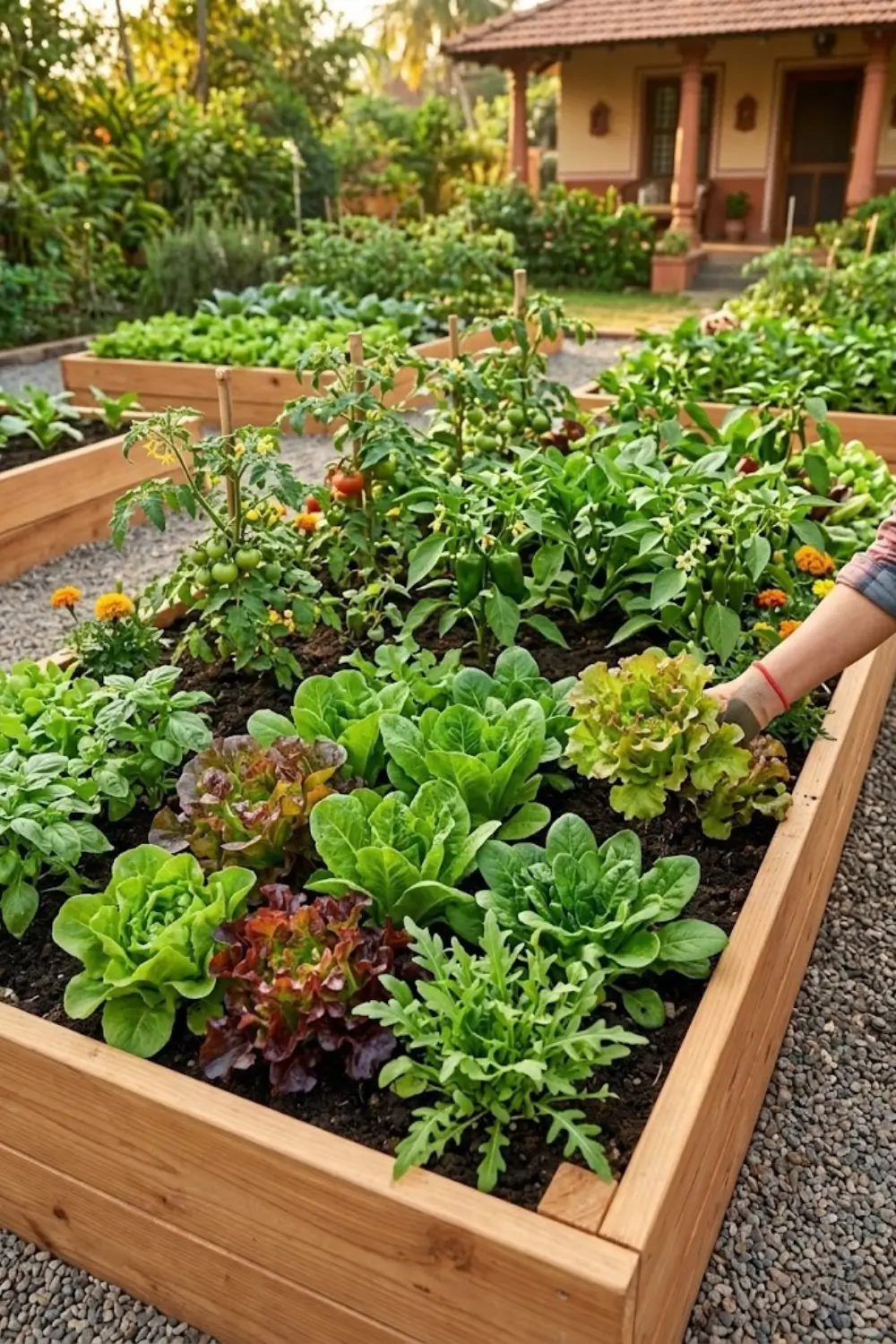
Raised beds — enclosed frames 20–30 cm deep, filled with quality soil mix — offer several advantages over in-ground growing. They're often the best starting point for anyone with a small yard or patio who wants higher yields with less effort.
Why raised beds work: No tilling required. Better drainage and aeration than most native soils. Soil warms faster in spring, extending the growing season. Fewer weeds. Ergonomic height reduces back strain.
A single 4×8 ft (120×240 cm) raised bed planted intensively can produce dozens of kilograms of vegetables in a season. The key is combining quick-maturing crops (radishes, lettuce) with longer-season plants (tomatoes, peppers) to keep the bed continuously productive.
Vertical Gardening: Maximise Small Spaces
Growing upward is one of the smartest moves a small-space gardener can make. Trellises, cages, hanging baskets, stakes, wall-mounted planters, and tiered shelving multiply production without requiring more floor area.
Natural climbers: Pole beans, peas, cucumbers, vining squash, indeterminate tomatoes, and passionfruit all produce significantly more per square foot when trained vertically rather than left to sprawl. Vertical growing also improves air circulation around plants, which reduces fungal disease pressure.
Growing Method Comparison
| Method | Best For | Main Challenges | Ideal Plants |
|---|---|---|---|
| Containers | Balconies, patios, renters, limited space | Frequent watering, limited root space | Herbs, lettuce, chillies, cherry tomatoes, spring onions |
| Raised Beds | Small–medium yards, beginners, poor native soil | Initial setup cost, soil replenishment over time | Almost anything except very large vining crops |
| In-Ground | Larger spaces, permanent gardens, good native soil | Soil preparation, weeding, harder access | Large vining crops, perennials, fruit bushes and trees |
| Vertical | Any space — especially balconies and small patios | Structural support required, wind exposure | Beans, peas, cucumbers, tomatoes, climbing flowers |
Soil & Compost: The Foundation
Why Soil Quality Matters
Soil is not just "dirt" — it is a living ecosystem of minerals, organic matter, microorganisms, and nutrients that plants depend on entirely. Most problems gardeners attribute to pests, weather, or plant variety are actually soil problems in disguise. Plants in healthy soil thrive with minimal intervention. Plants in poor soil struggle no matter what else you do.
Container Soil: Never Use Garden Soil
Critical rule: Never fill containers with garden soil or topsoil taken from the ground. It compacts in pots, suffocates roots, drains poorly, and introduces weeds and soil pathogens. Always use potting mix formulated for containers.
A good all-purpose container mix contains: Compost (40–50% — nutrition and microbial life), peat moss or coco coir (25–30% — water retention without compaction), perlite or coarse grit (20–25% — drainage and aeration), and optionally vermicompost or worm castings (5–10% — excellent slow-release nutrition).
Raised Bed and In-Ground Soil
Healthy garden soil is a balanced mix of sand, silt, clay, and organic matter. Many yards — especially new-build properties and urban plots — lack this balance. Raised beds give you full control: fill them with your chosen mix from day one.
A practical raised bed mix: Approximately 60% quality topsoil or loam, 30% compost, and 10% aeration material (perlite, coarse sand, or coco coir). This combination supports drainage, moisture retention, and nutrient availability — and it works reliably across a wide range of vegetables and herbs.
Home Composting : Free Fertilizer & Soil Amendment
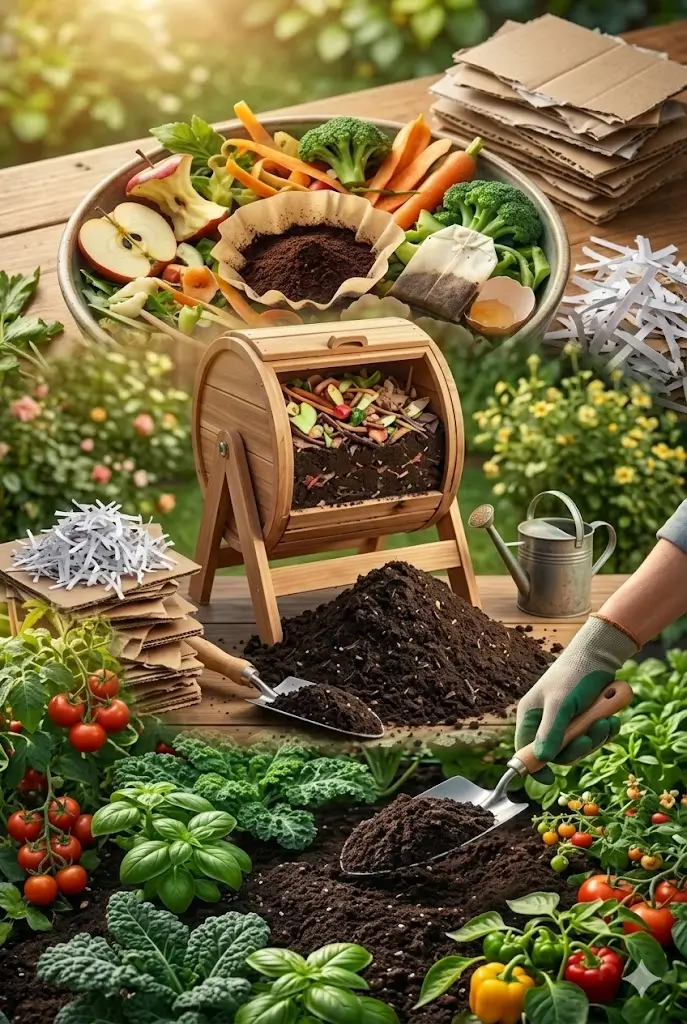
Compost is decomposed organic matter — kitchen scraps and yard waste transformed by bacteria and fungi into rich, crumbly soil amendment. It's the most effective thing you can add to any garden, and it's made entirely from material you would otherwise discard.
What to compost: Vegetable peels, fruit scraps, coffee grounds, tea bags, dry leaves, shredded cardboard, grass clippings, plant trimmings.
Avoid: Meat, dairy, oily food, pet waste, diseased plants, treated wood products.
The basic process: Mix roughly 3 parts dry (brown) material — leaves, cardboard, straw — with 1 part wet (green) material — fresh scraps, grass cuttings. Keep as moist as a wrung-out sponge. Turn every few weeks. Ready in 2–6 months.
The result: Rich, dark, crumbly material that improves soil structure, adds nutrients, and feeds beneficial microorganisms. Free fertilizer from "waste."
📚 Deep Dive: Soil, Fertilisers & Safe Inputs
For comprehensive guidance on soil testing, composting methods, understanding NPK, fertiliser safety, pH management, and organic soil amendments — including the P.L.A.N.T. safety framework — visit our dedicated guide: Safe Inputs & Natural Practices →
Sunlight Management & Watering
Understanding Sunlight Requirements
Matching plant to light condition is one of the most impactful decisions in home gardening. Placing a sun-loving vegetable in inadequate light leads to weak growth, poor flowering, and near-zero yield — no matter how well you water and feed.
| Sun Requirement | Direct Sun Hours | Suitable Crops |
|---|---|---|
| Full Sun | 6–8+ hours | Tomatoes, peppers, cucumbers, beans, aubergine, squash, chillies, most fruiting vegetables |
| Part Sun | 3–6 hours | Lettuce, spinach, kale, chard, beetroot, peas, most culinary herbs, spring onions |
| Shade Tolerant | 2–3 hours | Mint, microgreens, sprouts, some leafy greens, rhubarb |
A common beginner mistake: Planting sun-loving vegetables in areas with limited sunlight. Plants like tomatoes generally produce better when they receive adequate direct sunlight, while low-light conditions can reduce growth and yield. Understanding your space’s actual sun exposure before choosing plants can help improve results.
Watering: The #1 Gardening Challenge
More plants die from incorrect watering than from any other single cause. Too much water drowns roots. Too little causes wilting and stress. The challenge is that both problems can look similar — a wilting plant may need water, or it may already have too much.
How to Water Correctly
- The finger test: Push your finger 5 cm (2 inches) into soil. Dry at that depth — water thoroughly. Still moist — wait another day. This simple test is more reliable than any watering schedule.
- Water deeply, not frequently: Soak soil thoroughly, then let the top layer dry before watering again. Daily shallow watering creates weak, shallow-rooted plants vulnerable to heat and drought.
- Morning watering: Leaves dry before nightfall, reducing fungal disease. Avoid evening watering if foliage gets wet.
- Water at the base: Direct water at the soil, not the leaves. Wet foliage promotes bacterial and fungal disease.
- Containers need more frequent watering: During summer heat, containers may need checking twice daily. In cool seasons, once every 2–3 days may be sufficient. Always respond to actual conditions, not a schedule.
⚠️ Overwatering vs Underwatering Signs
Overwatering: Yellow leaves (especially lower leaves), mushy
stems at the base, soil staying wet for days, mould on soil surface, wilting
despite wet soil.
Underwatering: Dry, crispy leaf edges, soil pulling away from
pot edges, lightweight pot, wilting that recovers quickly after watering.
Tools That Help
Soil moisture meters remove the guesswork from watering — especially useful for beginners and for container gardens where conditions change rapidly. A basic probe meter costs very little and takes seconds to use.
Drip irrigation and soaker hoses deliver water directly to root zones, reducing evaporation and keeping foliage dry. Combined with a simple timer, they provide consistent watering without daily manual effort — ideal for balcony gardens and raised beds during summer.
Essential Gardening Tools
Quality tools make gardening easier, more enjoyable, and more effective. Here's what beginners actually need — nothing more.
Hand Trowel
For digging holes, transplanting seedlings, and scooping soil. Stainless steel with a comfortable grip. The single most-used tool in any small garden.
Pruning Shears
Sharp bypass pruners for harvesting, deadheading, and pruning stems. Clean cuts heal faster, reduce disease, and keep tools working well for years.
Watering Can or Hose
A 5–8 litre can with a long spout for containers. A quality hose with adjustable nozzle for larger gardens. Consistent, targeted watering is everything.
Bucket or Trug
A lightweight bucket or garden trug is useful for carrying soil, compost, tools, and harvested produce around your garden with less mess.
Garden Gloves
Protect hands from thorns, blisters, and soil bacteria. Fitted gloves with grippy palms allow fine work without sacrificing protection.
Hand Fork / Cultivator
Three-prong tool for loosening compacted soil, weeding between plants, and mixing amendments into containers. More useful than a full-size rake for small spaces.
Soil Moisture Meter
Removes guesswork from watering. Insert probe 5 cm into soil and read moisture level in seconds. Invaluable for containers where conditions change quickly.
Kneeling Pad
Foam pad protects knees during planting and weeding. Often overlooked but makes gardening far more comfortable, especially for extended sessions.
Plant Labels & Marker
Label everything with plant name and date. Memory is unreliable — labels are permanent records that prevent mix-ups and make journal-keeping easier.
Garden Journal
A notebook or notes app recording what was planted, when, and what happened. Builds a season-by-season reference that improves every subsequent year.
💰 Tool Buying Tip
A small set of quality tools outperforms a large collection of cheap ones. Stainless steel trowels, forged bypass shears, and well-stitched gloves last years without rusting, dulling, or splitting. Clean and dry metal tools after every use and they will serve you through many growing seasons.
Easiest Plants for Beginning Home Gardeners
Start with these forgiving, productive plants. Early success builds the confidence to tackle more challenging crops in subsequent seasons.
Easiest Vegetables
Cherry Tomatoes
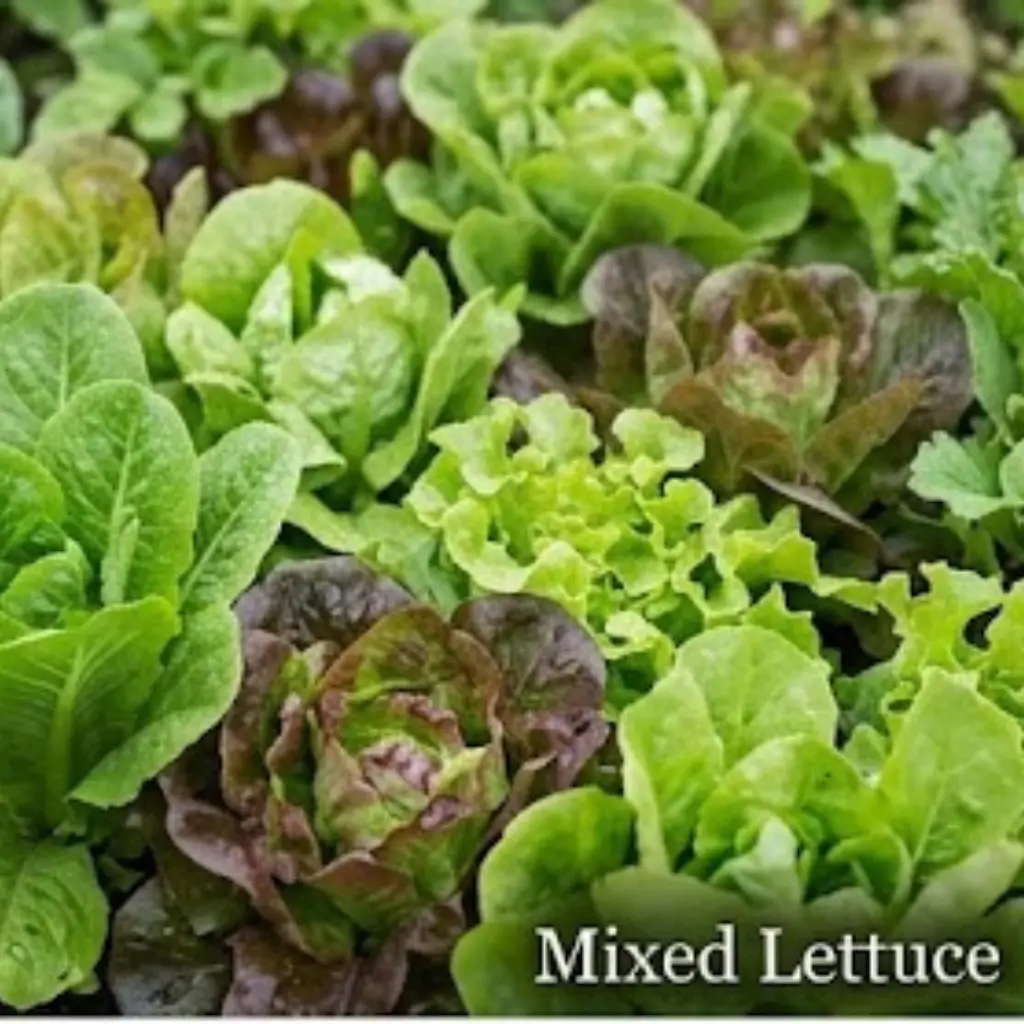
Leaf Lettuce
Spinach
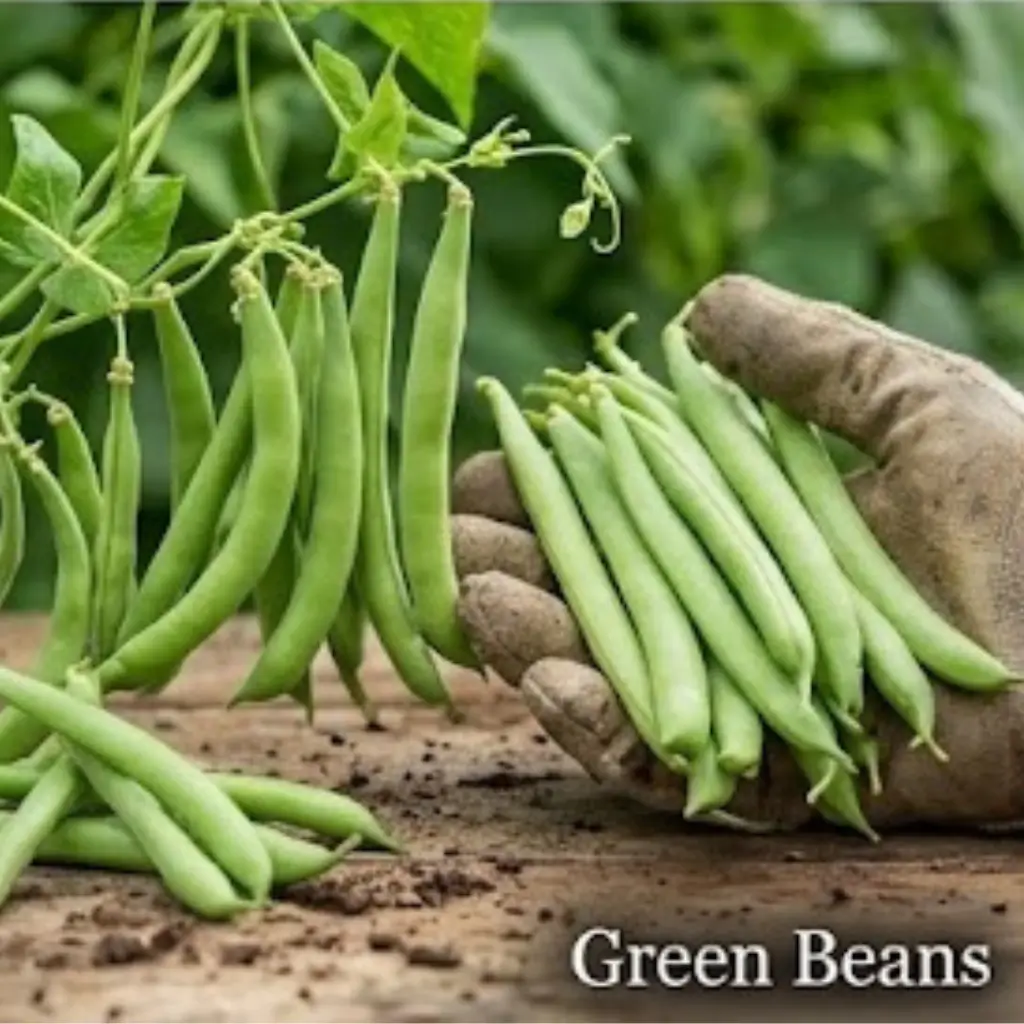
Bush Beans
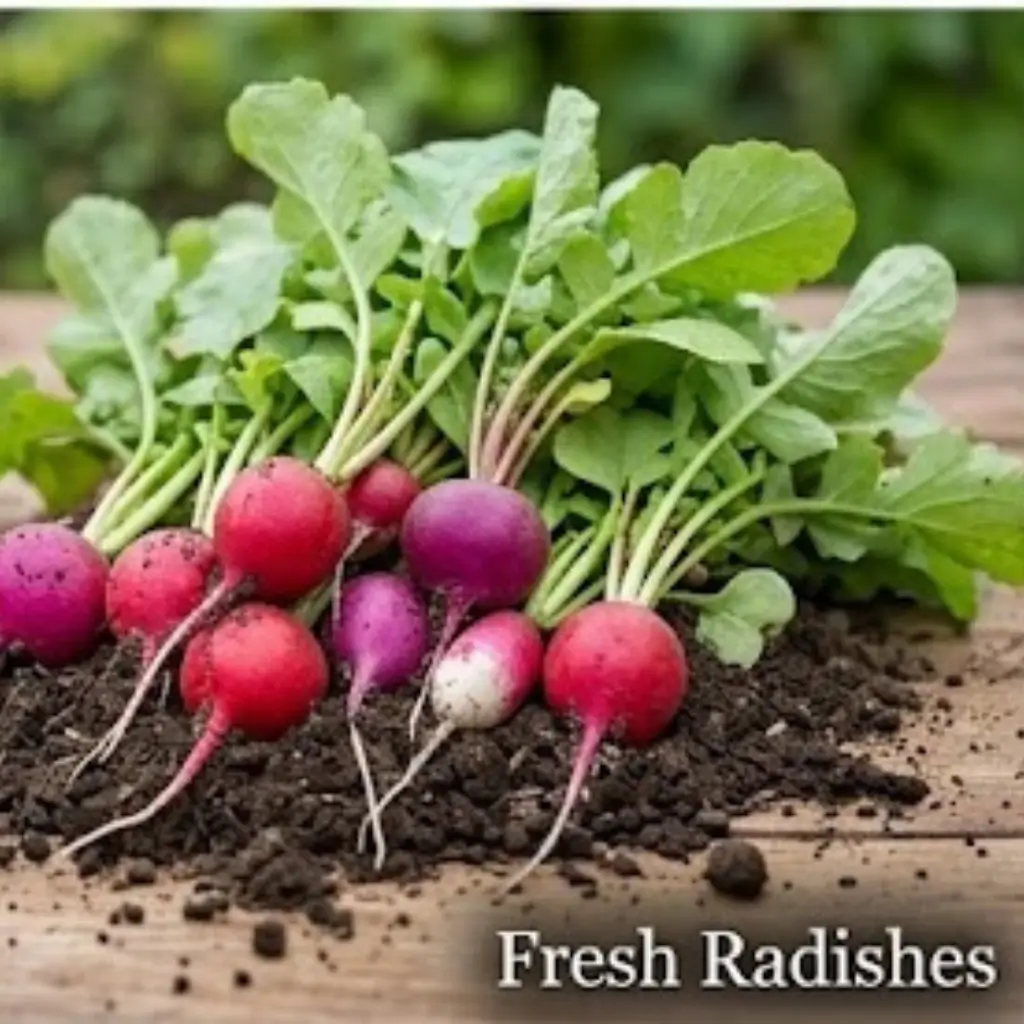
Radishes
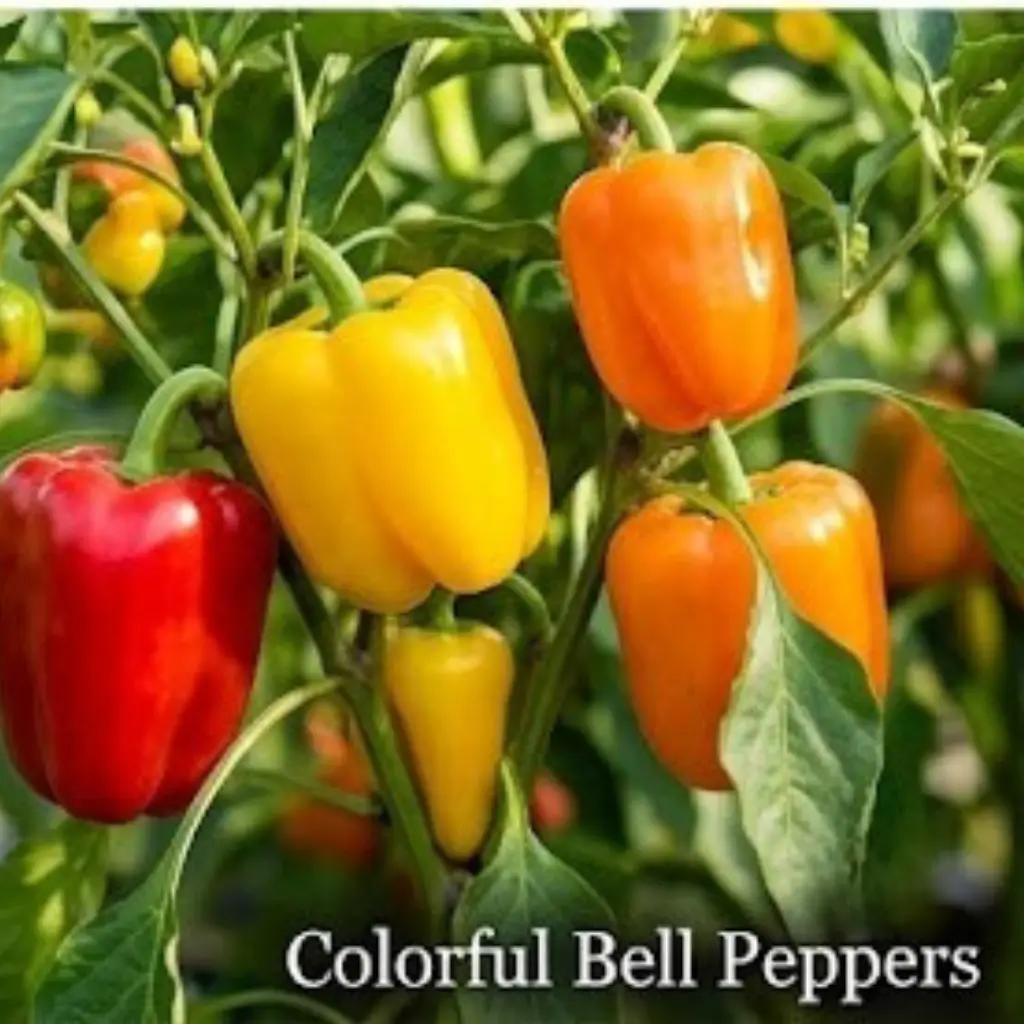
Peppers & Chillies
Easiest Culinary Herbs
Basil, parsley, coriander / cilantro, chives, mint, oregano, thyme, and rosemary are nearly foolproof. They grow in containers or in the ground, produce continuously, and tolerate beginner mistakes far better than vegetables. Fresh herbs from the garden are dramatically more flavourful than dried, store-bought equivalents.
Important: Grow mint in its own pot — it spreads aggressively by underground runners and will crowd out neighbouring plants if planted in a shared container or directly in the ground without a barrier.
Fruits for Home Gardens
Strawberries in containers or hanging baskets, dwarf citrus in large pots, and blueberries (which need acidic soil and two plants for cross-pollination) are among the most accessible home fruit options. In warm tropical climates, dwarf guava, curry leaf, and lemongrass grow readily in large containers and require minimal care once established.
🌱 Beginner Success Strategy
First season: Grow 4–6 easy plants. Master the basics — light, water,
soil, timing.
Second season: Add 3–4 new plants, including one or two slightly
more challenging ones.
Third season and beyond: Experiment with more demanding crops, save
seeds, and begin composting.
This builds skills systematically without the discouragement of too many early failures — the main reason beginners stop gardening.
🌿 Growing Medicinal Herbs?
Chamomile, Calendula, Echinacea, Lavender, Feverfew, and other medicinal plants are covered in detail — including traditional uses, potency notes, harvest timing, drying methods, and safety — in our dedicated guide: Medicinal Plants & Everyday Wellness →
Common Beginner Mistakes — And How to Avoid Them
Most beginner disappointments come from a small, predictable set of mistakes. Knowing them before they happen saves significant time, money, and frustration.
🌊 Overwatering
The mistake: Watering on a fixed schedule instead of checking soil moisture. Drowning roots causes yellowing, wilting, and eventually root rot.
🌞 Wrong Sun Exposure
The mistake: Placing sun-loving crops in shaded spots. Tomatoes in low light produce spindly growth and almost no fruit.
🪴 Pots Too Small
The mistake: Under-potting restricts roots, stresses plants, causes rapid drying, and dramatically reduces yields. A tomato in a small pot cannot perform — regardless of care.
📅 Ignoring Seasonal Timing
The mistake: Planting warm-season crops before the last frost, or cool-season crops in summer heat. Both lead to poor germination or bolting.
🥬 Overcrowding
The mistake: Planting too close together. Plants compete for light, water, and nutrients. Poor air circulation promotes disease.
🪵 Garden Soil in Containers
The mistake: Filling pots with garden soil or topsoil from the ground. It compacts, drains poorly, and introduces weeds and pathogens.
🌿 Letting Herbs Bolt
The mistake: Allowing coriander, basil, and parsley to flower. Once bolted, leaf production stops and flavour declines sharply.
🦟 Missing Pests Early
The mistake: Not inspecting plants regularly. By the time damage is obvious, pest populations are large and harder to control.
Pest Prevention: The Basics
Pests are a normal part of gardening. The goal is not to eliminate every insect — it's to keep populations below the level that causes real damage, while protecting the beneficial insects (ladybirds, lacewings, bees, hoverflies) that do essential work in your garden.
Prevention Comes Before Treatment
Healthy plants growing in good soil — with appropriate light, water, and nutrition — are significantly more resistant to pest and disease pressure than stressed plants. A plant that is overwatered, over-fertilised, or in poor light is an open invitation to opportunistic pests. Build plant health first, and pest management becomes manageable rather than chronic.
Simple Prevention Practices
- Inspect plants regularly — catch problems early, when they are easy to address by handpicking or a targeted spray.
- Water at the base — wet foliage overnight creates ideal conditions for fungal disease.
- Remove diseased material promptly — don't leave rotting or diseased leaves on plants or on the soil surface.
- Encourage beneficial insects — grow flowering plants alongside vegetables. Marigolds, dill, fennel, and phacelia attract ladybirds and lacewings that feed on aphids and mites.
- Use companion planting — marigolds deter aphids and whitefly. Basil planted near tomatoes improves their pest resistance. Nasturtiums act as trap crops, drawing aphids away from vegetables.
- Physical barriers — row covers, fine netting, and copper tape provide effective protection without any chemical application.
🛡️ Complete Pest Control & Safe Inputs Guide
For the full guide to pest identification, organic solutions (neem oil, insecticidal soap, diatomaceous earth), integrated pest management (IPM), fertiliser safety, and when to escalate treatment — see our dedicated section: Safe Inputs & Natural Practices →
What to Do Each Season
🌍 A Note on Global Seasons
The guide below uses a temperate-climate framework. In the southern hemisphere (Australia, South Africa, South America), seasons are reversed — summer runs December–February. In tropical climates (much of India, Southeast Asia, parts of Queensland), seasons are defined by wet and dry rather than temperature. Always supplement this guide with a local planting calendar — they are far more accurate for your specific region than any general framework.
📅 Find Your Frost Dates
Your USDA hardiness zone determines when to plant. Last spring frost and first fall frost dates vary by region. Search "frost dates [your zip code] " to find your specific dates, which guide all planting timing.
India: ICAR regional guides · Australia: Agriculture Victoria · US: Extension.org by state
🌱 Spring
- Start seeds indoors before last frost
- Top-dress raised beds with compost
- Plant cool-season crops: lettuce, peas, spinach, brassicas
- Transplant seedlings after frost risk passes
- Install supports and trellises before plants need them
- Divide perennial herbs — chives, mint — into new pots
☀️ Summer
- Transplant warm-season crops: tomatoes, chillies, beans
- Water daily in heat — check containers morning and evening
- Harvest regularly to encourage continued production
- Feed container plants every 2–3 weeks
- Monitor for pests — heat stress makes plants vulnerable
- Succession-sow coriander, lettuce, radish every 3 weeks
🍂 Autumn / Fall
- Harvest and preserve summer crops before first frost
- Sow cool-season crops: spinach, kale, chard
- Plant garlic and onions for spring harvest
- Add compost and mulch to resting beds
- Save seeds from best-performing plants
- Clear diseased material; compost healthy debris
❄️ Winter
- Plan next year's garden — review your journal notes
- Order seeds early for best variety selection
- Maintain indoor growing: herbs, microgreens, sprouts
- Service and clean all tools
- Protect outdoor pots from frost
- Build or repair raised beds, trellises, and compost bins
📋 Daily & Weekly Garden Maintenance
Successful gardens thrive on consistent routine care beyond seasonal tasks. For detailed maintenance checklists, troubleshooting guides, and practical routines that keep your garden healthy year-round, see our dedicated sub-guide: Garden Care & Maintenance Guide →
Helpful Resources
Medicinal Plants & Everyday Wellness
For growing herbs with medicinal properties — Chamomile, Echinacea, Lavender, Calendula, Feverfew, and more — including harvest timing, drying methods, traditional uses, and safety notes.
Explore Medicinal Plants →Healing Garden Guide
Comprehensive guide to harvesting, drying, and storing herbs and vegetables for maximum potency and long shelf life. The complete reference for preserving what your garden produces.
Read the Guide →Safe Inputs & Natural Practices
Deep guide on soil safety, fertilisers, organic pest control, label reading, composting methods, and safe gardening practices for health-conscious growers.
Learn Safe Practices →Garden Care & Maintenance
Daily routines, seasonal checklists, troubleshooting guides, and practical advice for keeping your home garden healthy and productive through every season.
View Maintenance Guide →Free Beginner Garden Plan (PDF)
Get a simple step-by-step plan matched to your space — windowsill, balcony, or backyard. What to grow first, what tools you actually need, and how to avoid the mistakes that stop most beginners.
- ✔ Beginner plant selection for your climate
- ✔ Container sizing and soil mix guide
- ✔ Seasonal planting calendar
- ✔ Common mistakes and how to avoid them
By signing up, you agree to our Privacy Policy. No spam. Unsubscribe anytime.
Not Sure Where to Start?
See the simplest, most beginner-friendly way to begin growing food at home — regardless of your space or experience level.
Start With a Beginner Setup →